
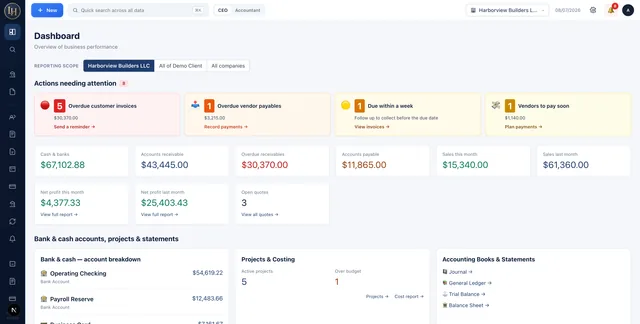
BUSINESS / COMPLETEYour day.
Your day.
In focus.
Banking, invoices and customer reports with Business. Batch work and deeper reporting with Complete.
Explore NetLedg Business ↗● THE REAL WORKSPACE01 / 03
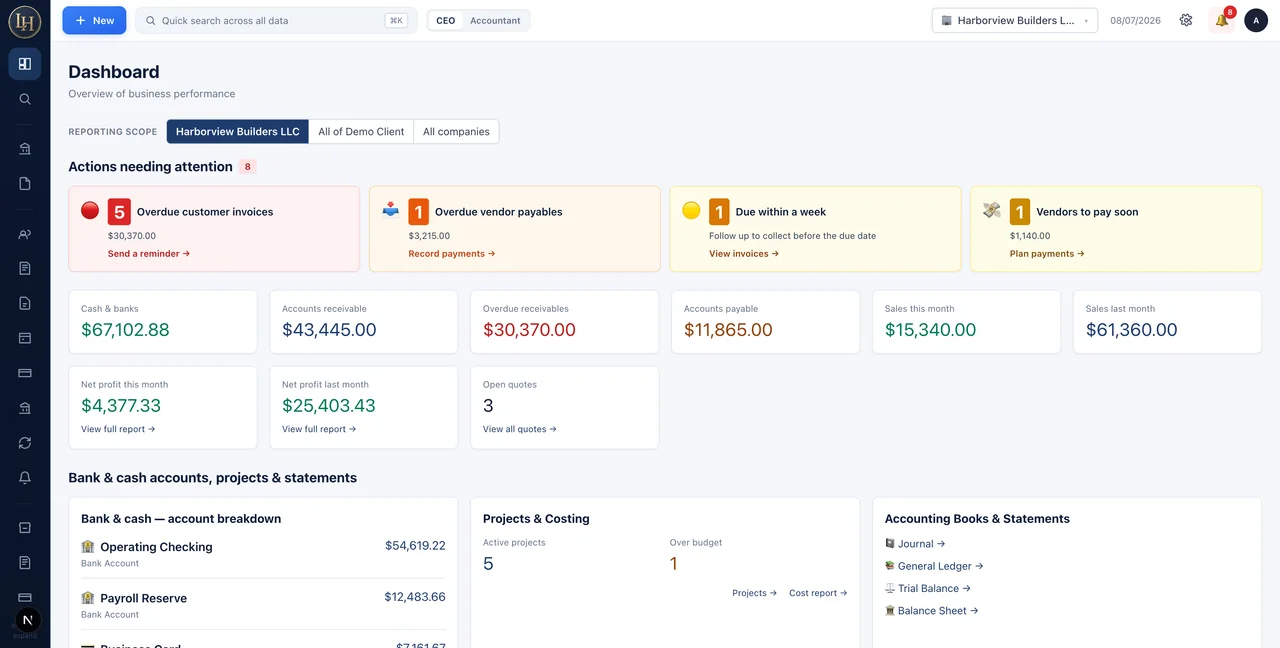
ACCOUNTING SOFTWARE, BUILT BY ACCOUNTANTS
Run your books, send invoices and track inventory in one connected workspace.
A CLEARER VIEW STARTS HERE
ONE WORKSPACE. YOUR KIND OF DEPTH.
Banking, invoices and customer reports with Business. Batch work and deeper reporting with Complete.
Explore NetLedg Business ↗Unit economics by item. Margins by lot. Date-range reports and cost trails—from source bills to what you make, ship and sell.
Explore Perishable Inventory ↗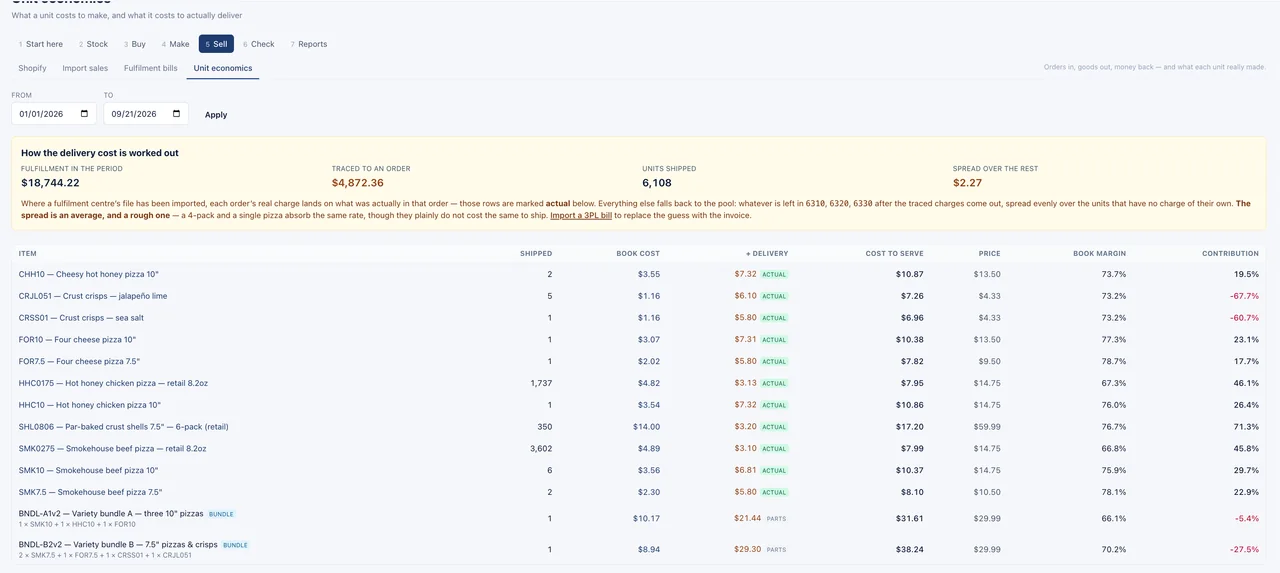
Forecasts, scenarios and debt planning. See the assumptions behind the numbers before you decide.
Explore CFO Suite ↗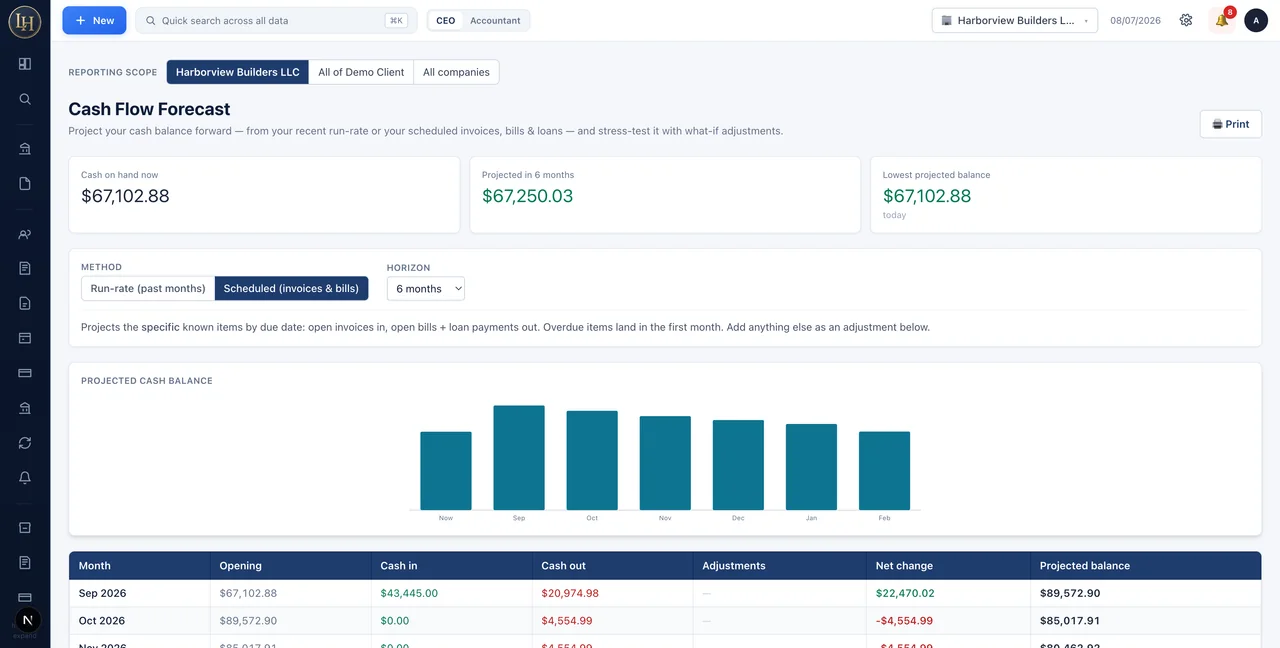
Start with everyday accounting.
Add the depth your business needs.
 NetLedgOne connected workspace.
Standard inventory is included in Business. Perishable Inventory and CFO Suite are optional.
 Read-only bank feeds
 Invoice payments
 PayPalPayments & payouts
 ShopifySales & inventory workflows
Shopify automation. Automate order and payout imports. Review sales, then update NetLedg inventory for eligible fulfilled orders. Available with Perishable Inventory.
Supported integrations, not endorsements. Availability depends on company setup.
Each one opens the real thing.
No form. No quiz.
Unit economics · actual product screenFollow the cost trail →02CFO SUITEWhat happens if cash arrives later?Move one assumption. Watch three months of cash respond.Cash forecast · actual product screenTry the scenario →03BUSINESS COMPLETEHow much work could happen in one grid?Seven lines, three invoices. Tick the rows, set a value once, review the batch.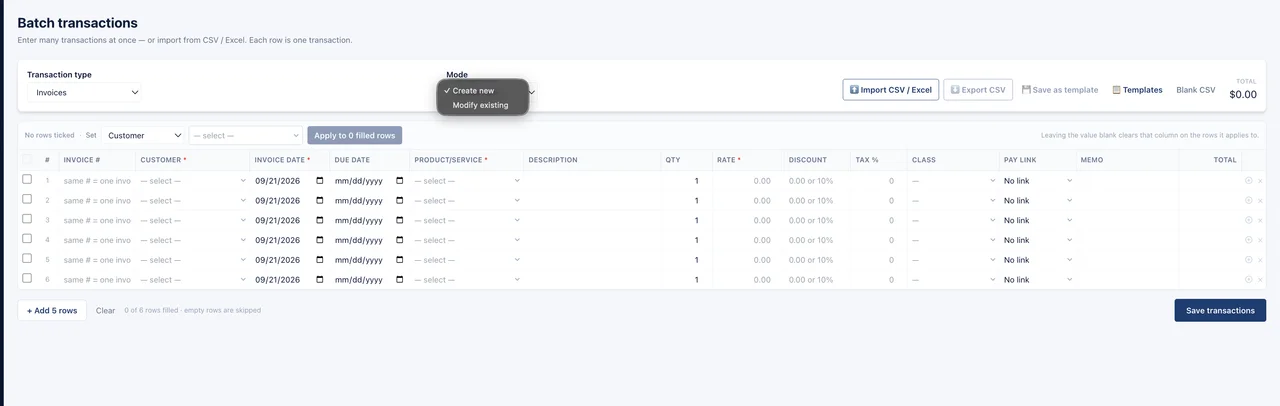 Batch invoices · actual product screenTry the batch grid →
Prefer to watch or browse? Three narrated tours17 real screens
Protect your access with passkeys and two-factor sign-in. Keep banking connected with read-only feeds. Review changes with attributed audit history; lock finished periods with Complete.
Security & your data →Migration is export-based and reviewed before anything is relied on.
Try a hands-on sample →Standard inventory includedSeparate companies. One login.Portals with Complete
NetLedg Business starts at $20 per company per month, before tax. Modules are optional.
For businesses, accounting practices and personal books. Ready already? Start a 30-day trial